
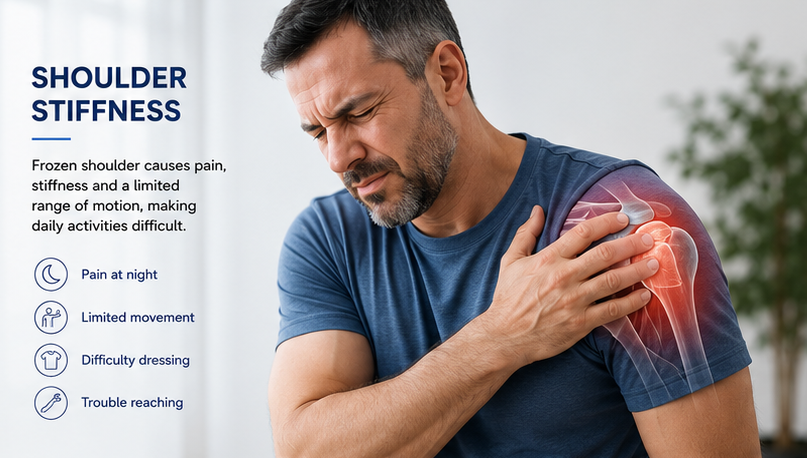
Frozen shoulder, also known as adhesive capsulitis, is a common cause of shoulder pain and shoulder stiffness that can significantly affect daily activities and quality of life. Many patients in Abu Dhabi and across the UAE experience progressive stiffness, difficulty sleeping and limited range of motion without fully understanding the cause.
This condition is particularly common in adults between the ages of 40 and 60 and is more frequently seen in patients with diabetes, thyroid disorders or after periods of shoulder immobilisation. Due to the high prevalence of diabetes and sedentary office-based work among many residents in Abu Dhabi and the Emirates, frozen shoulder is increasingly recognised in the local population.
Early diagnosis and appropriate frozen shoulder treatment may help reduce pain, improve mobility and accelerate recovery.
What is Frozen Shoulder?
Frozen shoulder, medically known as adhesive capsulitis, occurs when the capsule surrounding the shoulder joint becomes inflamed and progressively stiff. Over time, the shoulder loses mobility and movement becomes painful and restricted.
The condition usually develops gradually and may worsen over several months if left untreated. Patients often report increasing difficulty reaching overhead, dressing, fastening a bra, putting on a jacket or sleeping on the affected side.
Frozen shoulder can affect both active and sedentary individuals and is one of the most common causes of persistent shoulder stiffness and limited range of motion.
Common Symptoms of Frozen Shoulder
Patients in Abu Dhabi commonly present with:
• Progressive shoulder stiffness
• Pain at night, especially while sleeping on the affected side
• Reduced range of motion
• Difficulty reaching overhead or behind the back
• Difficulty dressing or performing daily activities
• Pain while lifting objects or exercising
• Persistent limitation despite physiotherapy or medication
Why is Frozen Shoulder Common in Abu Dhabi and the UAE?
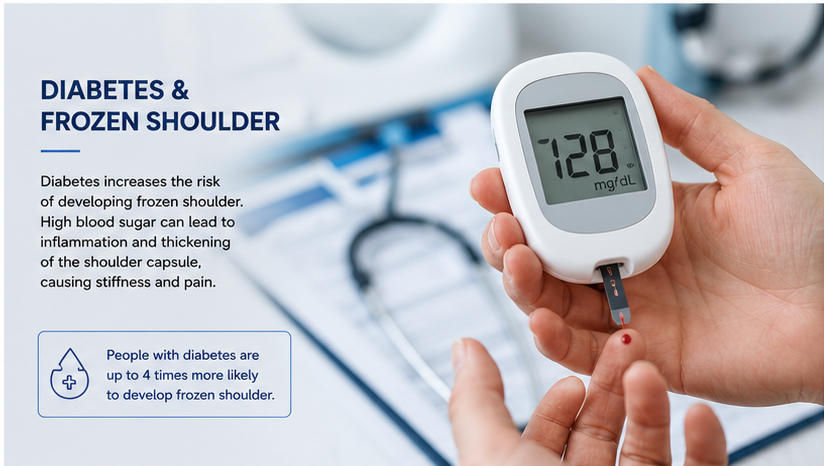
Frozen shoulder is frequently seen in Abu Dhabi due to several contributing factors. The high prevalence of diabetes in the UAE is one of the most important risk factors for adhesive capsulitis. Additionally, sedentary office work, prolonged desk activities and reduced shoulder mobility may contribute to the development of shoulder stiffness among active residents in Abu Dhabi.
The condition may also appear after shoulder injuries, surgery or prolonged immobilisation. Sports injuries, gym-related overuse and lifestyle factors may also contribute to shoulder pain and stiffness in the local population.
Stages of Frozen Shoulder
Frozen shoulder typically progresses through three stages:
1. Freezing Stage – Increasing pain and progressive stiffness.
2. Frozen Stage – Pain may improve slightly, but stiffness becomes severe.
3. Thawing Stage – Gradual recovery of shoulder movement over time.
Without appropriate frozen shoulder treatment, some patients may experience symptoms for many months.
Diagnosis
Diagnosis is usually based on clinical assessment and physical examination by a shoulder specialist. Patients demonstrate significant restriction in shoulder movement, particularly external rotation and overhead motion.
X-rays are often performed to exclude arthritis or other structural shoulder conditions. MRI may sometimes be requested to assess associated shoulder pathology such as rotator cuff tears, bursitis or inflammation.
Treatment Options
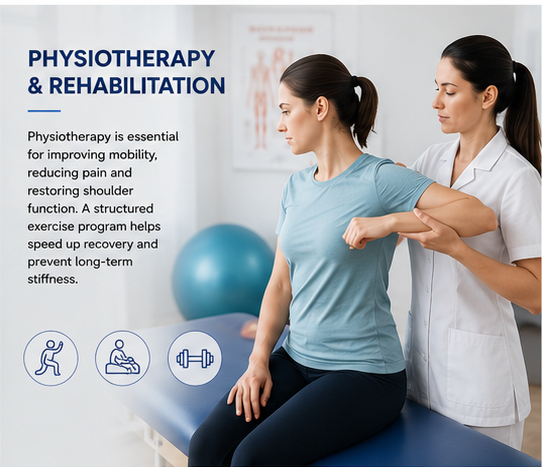
Treatment depends on symptom severity and stage of the condition. Conservative treatment is successful in many patients and may include:
• Physiotherapy and stretching exercises
• Anti-inflammatory medication
• Ultrasound-guided corticosteroid injections
• Hydrodilatation procedures
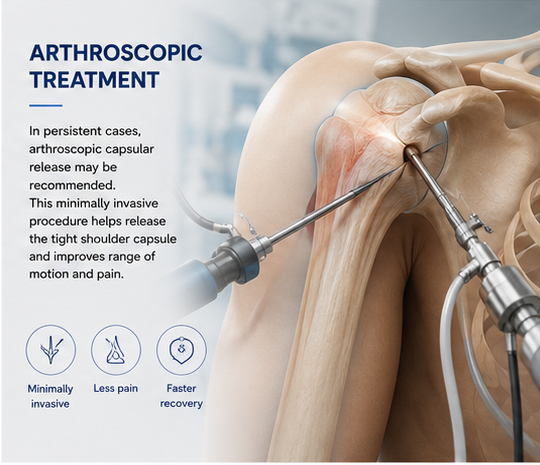
In persistent or severe cases, arthroscopic capsular release may be considered to improve mobility and reduce pain. Minimally invasive shoulder surgery may help restore function in selected patients with severe adhesive capsulitis.
When Should You See a Shoulder Specialist?
You should consider specialist shoulder evaluation if you experience:
• Shoulder stiffness lasting more than 6 weeks
• Pain at night affecting sleep
• Difficulty lifting the arm overhead
• Progressive limitation of shoulder movement
• Failure to improve with physiotherapy or medication
• Persistent limitation affecting work, sports or daily activities
Early assessment by a shoulder specialist in Abu Dhabi may help improve outcomes and reduce recovery time.
When Surgery May Be Needed
Surgery is usually reserved for patients with severe stiffness that does not improve with conservative treatment. Arthroscopic capsular release is a minimally invasive procedure performed using small incisions and specialised instruments. The goal is to release the tight shoulder capsule, improve range of motion and reduce pain.
Recovery and Rehabilitation
Recovery after frozen shoulder varies between patients. Some individuals recover within months, while others may experience symptoms for longer periods.
Physiotherapy and regular exercises are essential to restore shoulder mobility and prevent recurrent stiffness. Early frozen shoulder treatment often leads to better outcomes and faster recovery.
Conclusion
Frozen shoulder can significantly affect daily life, sleep and physical activity. Early specialist assessment may help reduce recovery time and improve shoulder function.
If you are experiencing persistent shoulder stiffness or pain in Abu Dhabi, specialised shoulder evaluation and minimally invasive treatment options are available at Burjeel Orthopedic Institute.
Frequently Asked Questions (FAQs)
Can frozen shoulder heal on its own?
Yes, some cases of frozen shoulder may gradually improve over time. However, recovery can take many months or even years, and some patients may continue to experience stiffness and pain without appropriate treatment.
Is frozen shoulder more common in diabetic patients?
Yes. Frozen shoulder is significantly more common in patients with diabetes. The condition is frequently seen in Abu Dhabi and the UAE due to the high prevalence of diabetes in the local population.
How long does frozen shoulder usually last?
Frozen shoulder may last from several months to over a year depending on severity and treatment. Early diagnosis and appropriate management may help improve recovery time.
Is surgery always necessary for frozen shoulder?
No. Most patients improve with conservative treatment such as physiotherapy, medication and ultrasound-guided injections. Surgery is usually reserved for severe cases that fail to improve.
Can physiotherapy help frozen shoulder?
Yes. Physiotherapy and stretching exercises are among the most important components of frozen shoulder treatment and may help restore mobility and reduce pain.
When should I see a shoulder specialist?
You should consider specialist evaluation if you experience persistent shoulder stiffness, pain at night, difficulty lifting the arm or symptoms lasting more than 6 weeks.