
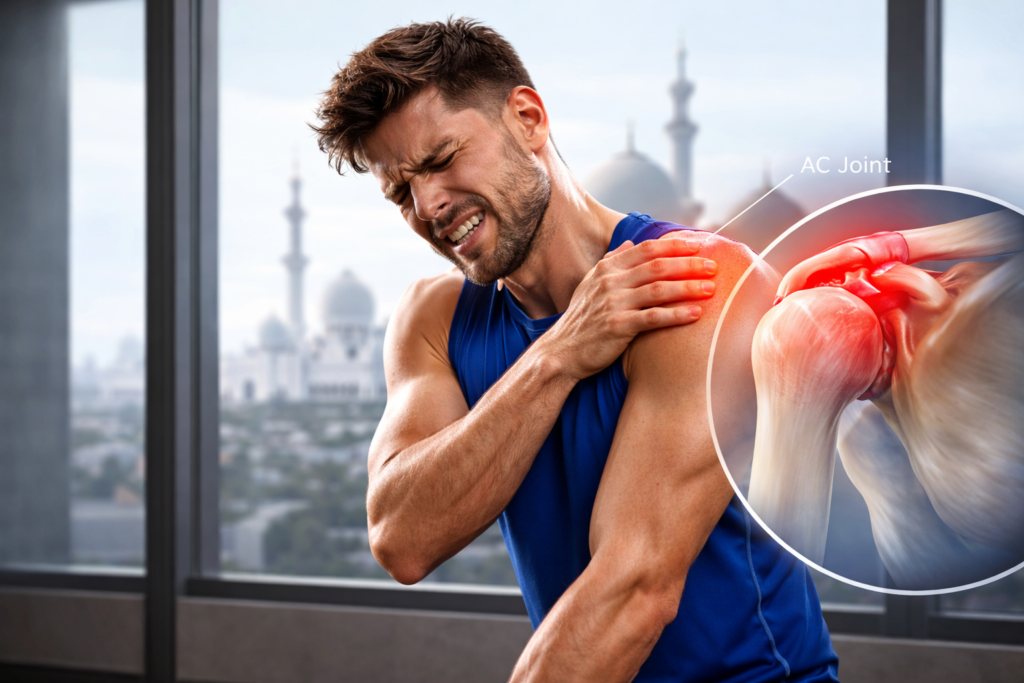
Acromioclavicular (AC) joint pain is a very common source of shoulder pain in Abu Dhabi, especially among gym users, weightlifters, cyclists, and athletes who participate in padel, tennis, football, rugby, and combat sports.
The AC joint sits at the top of the shoulder where the clavicle meets the acromion, and it plays a key role in lifting the arm, pressing movements, and overhead activity.
Because of the active lifestyle in the UAE (including high gym participation) AC joint problems are frequently seen in young and middle-aged adults.
This article explains the causes, symptoms, diagnosis, and most effective treatments available in Abu Dhabi.
What Is the AC Joint?
The acromioclavicular joint connects the collarbone (clavicle) and the top of the shoulder blade (acromion).
It is a small but essential joint that allows:
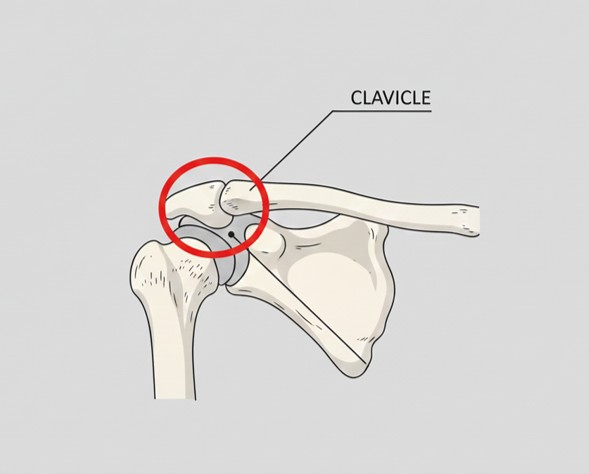
- Overhead movement
- Cross-body movement (bringing arm across the chest)
- Stability during pressing and pushing exercises
When irritated or injured, it can cause significant pain during daily and sporting activities.
Why Is AC Joint Pain Common in Abu Dhabi?
Several lifestyle and sports factors specific to the UAE significantly increase the incidence of AC joint problems.
1. Heavy Gym Training
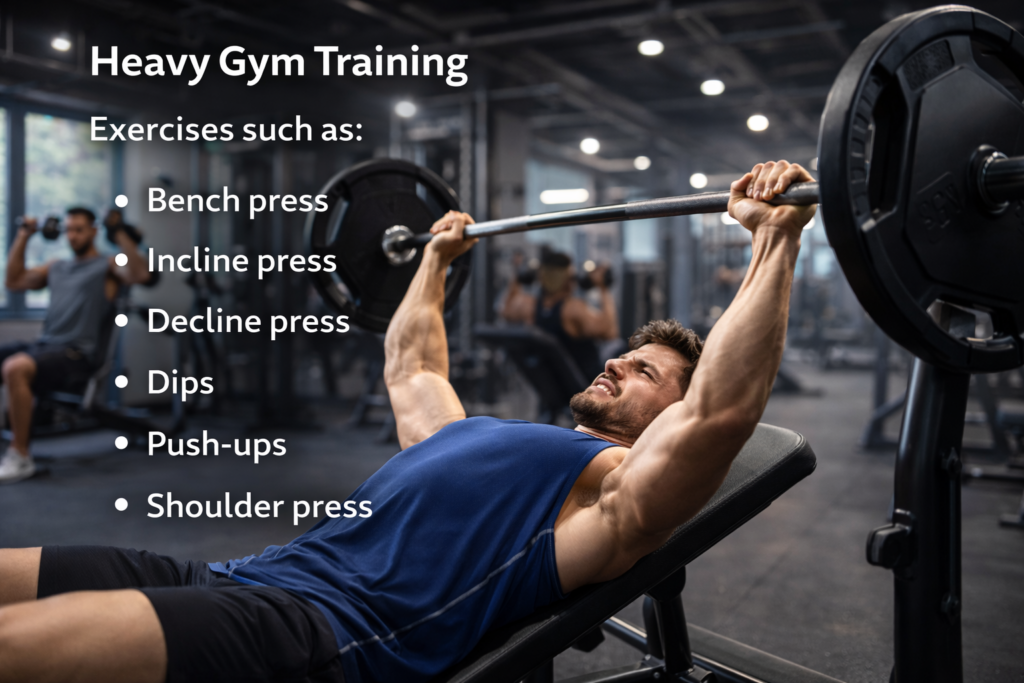
…place high stress directly on the AC joint.
Repetitive loading leads to inflammation, degeneration or micro-instability.
2. Padel and Tennis
These sports involve repetitive:
- Overhead motions
- Cross-body movements
- Rapid acceleration and deceleration
This increases compression forces on the AC joint.
3. Cycling and Scooter Falls
AC joint sprains are extremely common after:

Even low-impact trauma can injure the ligaments of the AC joint.
4. Early Degenerative Changes
Many individuals in Abu Dhabi begin gym training at a young age.
Years of repetitive loading may lead to early osteoarthritis of the AC joint.
Common Causes of AC Joint Pain
1. AC Joint Sprain (Separated Shoulder)
Caused by trauma—common in cyclists, footballers, rugby players, and MMA fighters.
Grades range from mild sprain to complete ligament rupture.
2. AC Joint Osteoarthritis
Degeneration from repetitive overhead or pressing activity.
Common in:
- Weightlifters
- CrossFit athletes
- Older adults
3. Distal Clavicle Osteolysis
Overuse injury seen in:
- Heavy bench pressers
- Bodybuilders
- CrossFit athletes
Micro-fractures occur at the end of the clavicle due to excessive stress.
4. Chronic Overload
Long-term gym routines with:
- Excessive chest training
- Poor technique
- Imbalance between chest and back muscles
lead to gradual irritation of the AC joint.
Symptoms of AC Joint Pain
Patients in Abu Dhabi commonly report:
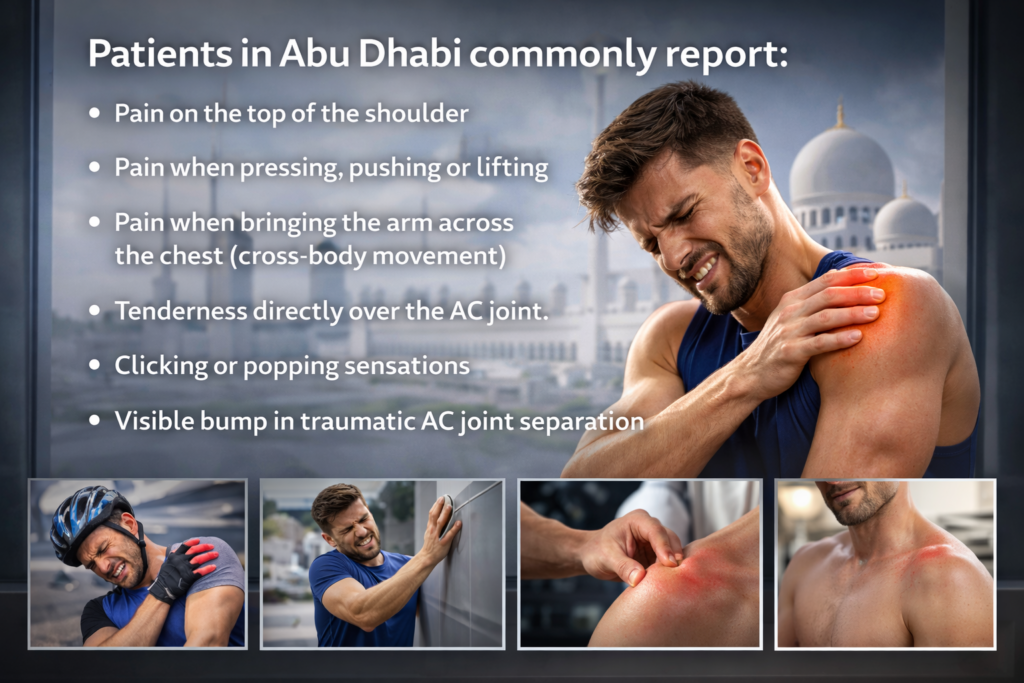
Pain is often worse after gym sessions, padel matches, or overhead activity.
When Should You See a Shoulder Specialist?
You should seek evaluation if you experience:
- Pain persisting for more than 2–3 weeks
- Difficulty with gym training or overhead activity
- Pain affecting daily tasks like reaching or dressing
- A traumatic fall with immediate swelling or deformity
- Progressive clicking or instability
Early diagnosis prevents chronic degeneration and improves outcomes.
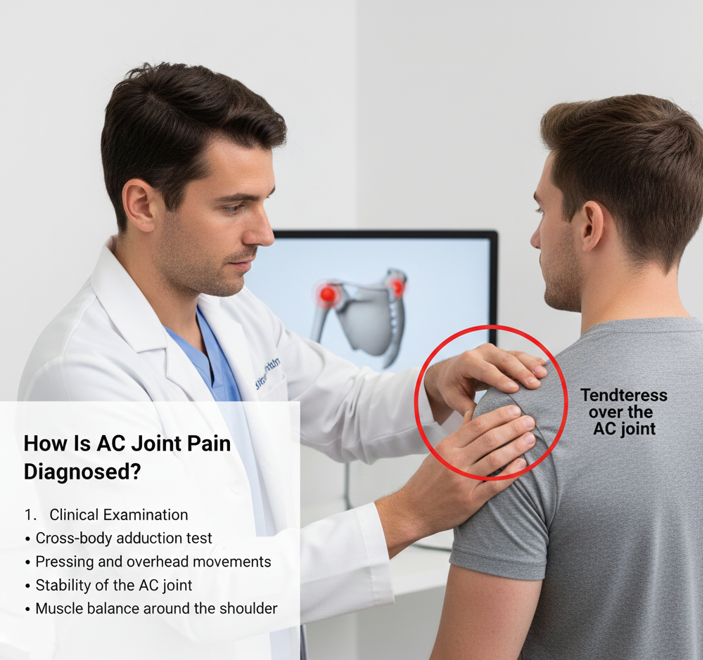
How Is AC Joint Pain Diagnosed?
1. Clinical Examination
A shoulder specialist will assess:
2. X-rays
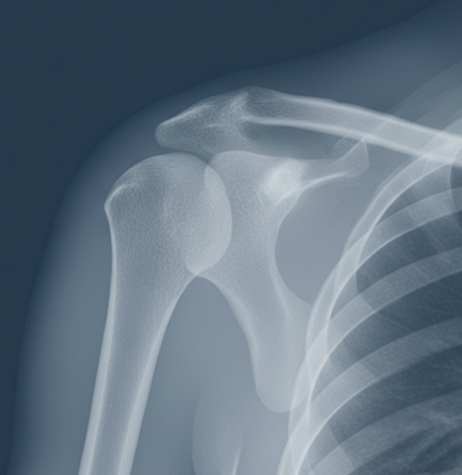
Useful to identify:
- AC joint separation
- Early osteoarthritis
- Osteolysis
- Calcifications
3. Ultrasound
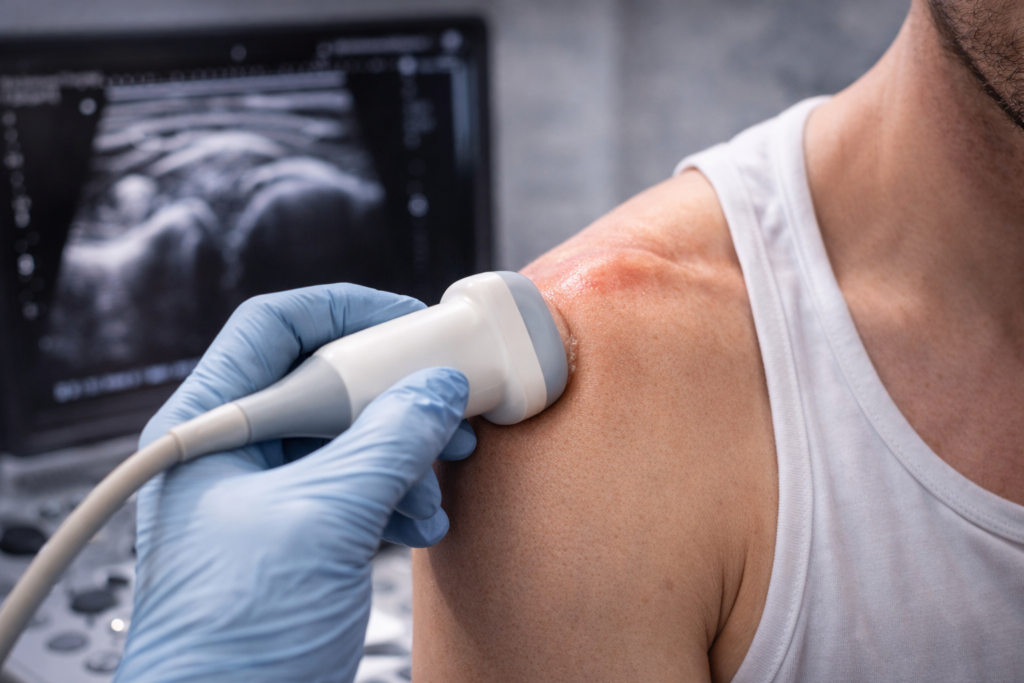
Helps evaluate:
- Local inflammation
- AC joint capsule
- Adjacent tendon involvement
4. MRI
Recommended when symptoms persist or when surgical planning is needed.
Shows:
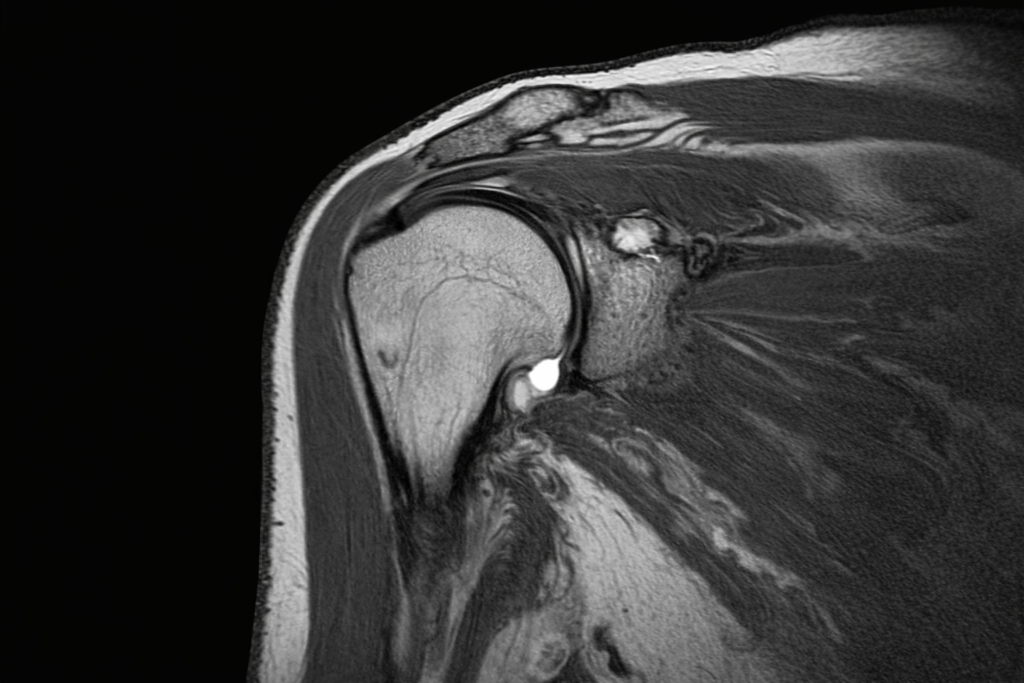
- AC joint degeneration
- Bone marrow oedema
- Ligament tears
- Associated rotator cuff pathology
Best Treatment Options for AC Joint Pain in Abu Dhabi
Most patients improve significantly with non-surgical treatment.
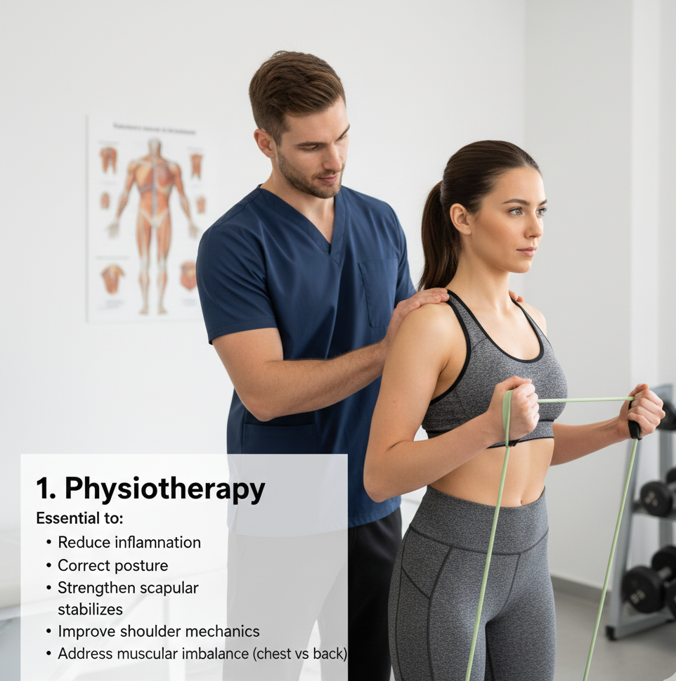
1. Physiotherapy
2. Activity Modification
Temporarily avoid:
- Heavy bench press
- Dips
- Incline press
- Cross-body movements
Alternative exercises can maintain strength during recovery.
3. Anti-Inflammatory Medication
Short-term use during painful flare-ups.
4. Ultrasound-Guided Corticosteroid Injection
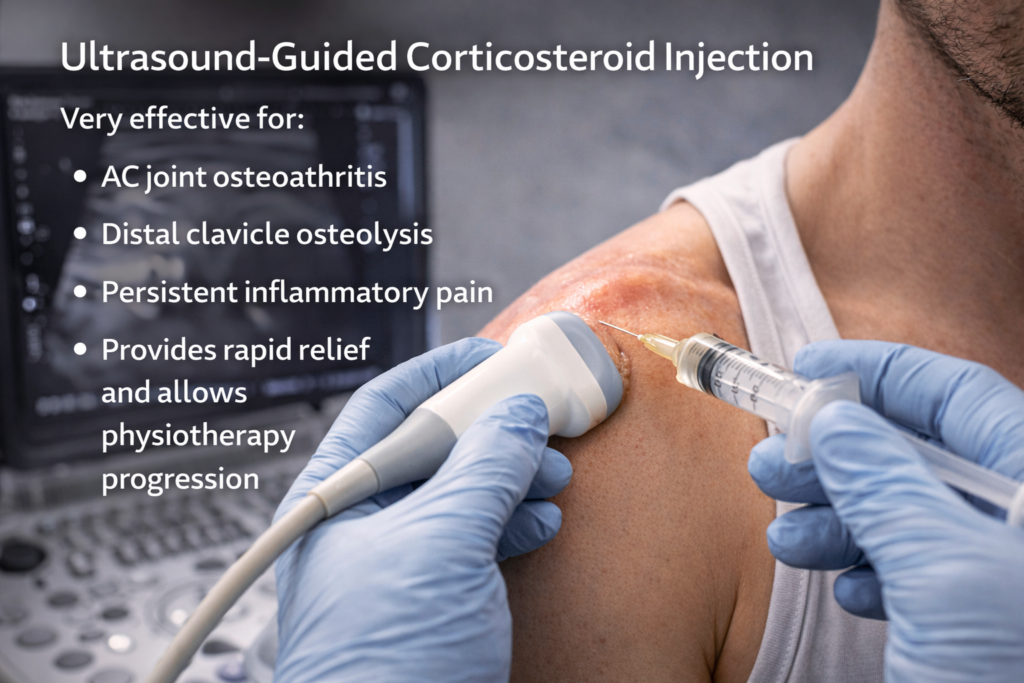
Very effective for:
- AC joint osteoarthritis
- Distal clavicle osteolysis
- Persistent inflammatory pain
Provides rapid relief and allows physiotherapy progression.
5. When Is Surgery Considered?
Surgery is recommended when:
- Pain persists beyond 3–6 months
- There is advanced AC joint osteoarthritis
- Conservative treatment fails
- There is severe distal clavicle osteolysis
- Recurrent AC joint instability affects sports performance
The most common procedure is distal clavicle excision (Mumford procedure), performed arthroscopically.
Benefits:
- Minimally invasive
- Excellent long-term results
- Fast return to activity
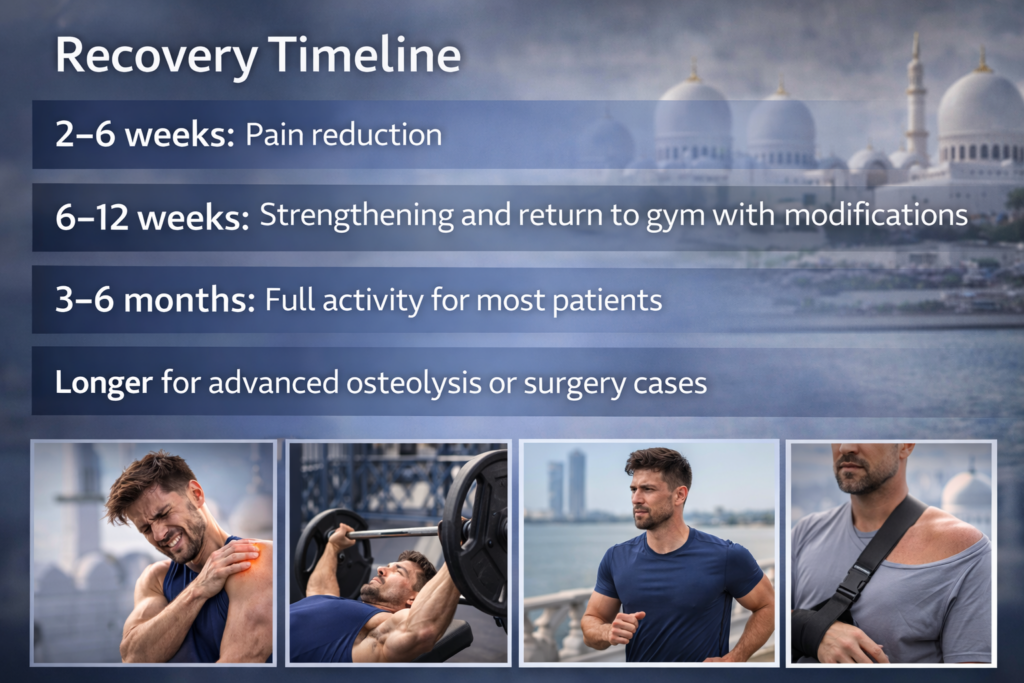
Recovery Timeline
Preventing AC Joint Pain
Especially for athletes and gym users in Abu Dhabi:
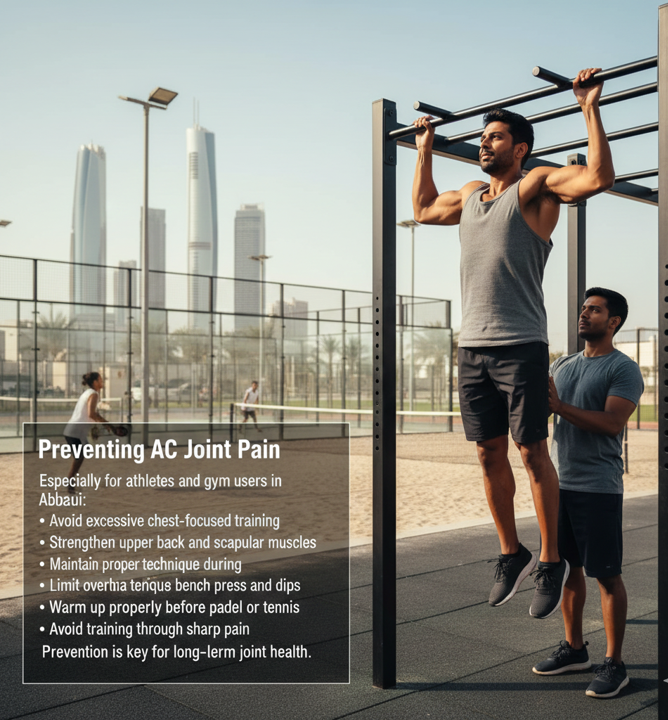
Prevention is key for long-term joint health.
Conclusion
AC joint pain is extremely common in Abu Dhabi due to gym training, overhead sports, falls, and repetitive loading.
With accurate diagnosis and individualized treatment (ranging from physiotherapy to guided injections or minimally invasive surgery) most patients return to full activity with excellent outcomes.
If top-of-shoulder pain persists, early evaluation by a shoulder specialist is essential to prevent chronic degeneration.