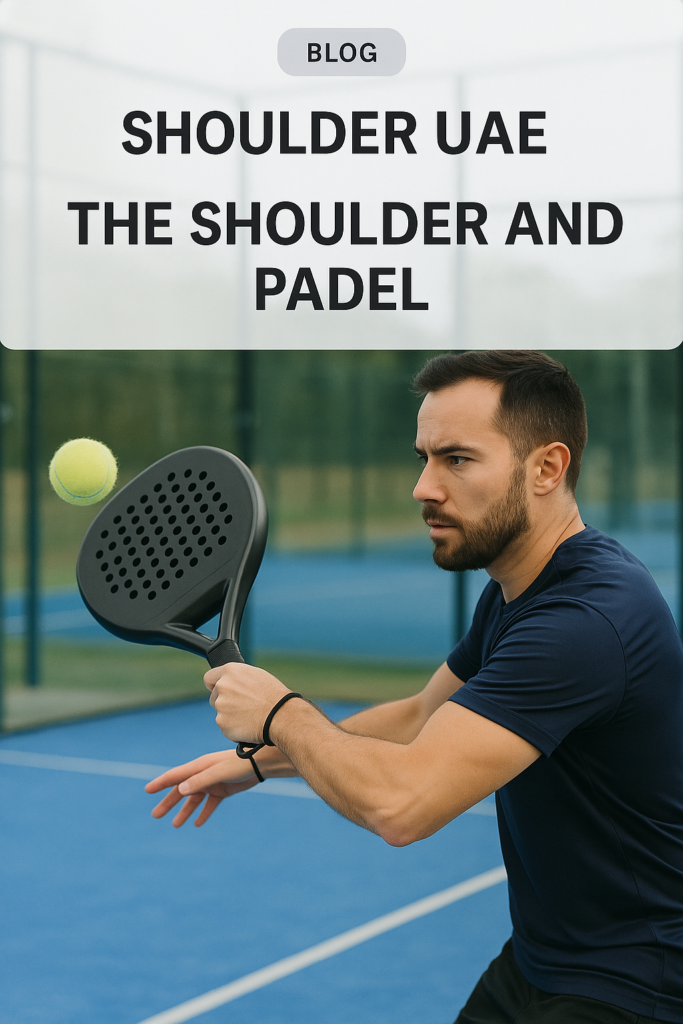
Padel and tennis have become two of the fastest-growing sports in Abu Dhabi and the UAE. With new courts opening every month and thousands of residents playing weekly, shoulder injuries related to racket sports have increased significantly.
The shoulder is exposed to repetitive overhead motions, high-speed strokes, sudden directional changes, and powerful accelerations—all of which can overload the rotator cuff, biceps tendon, and labrum.
This article explains why shoulder injuries are so common in padel and tennis players in Abu Dhabi, the main conditions involved, and how they are best diagnosed and treated.
Why Are Padel and Tennis Shoulder Injuries Common in Abu Dhabi?
1. Rapid Increase in Participation
Many players begin padel or tennis suddenly, without proper conditioning.
The shoulder is not prepared for the demands of repetitive overhead strokes.
2. High-Intensity Rallies and Repetitive Overhead Movements
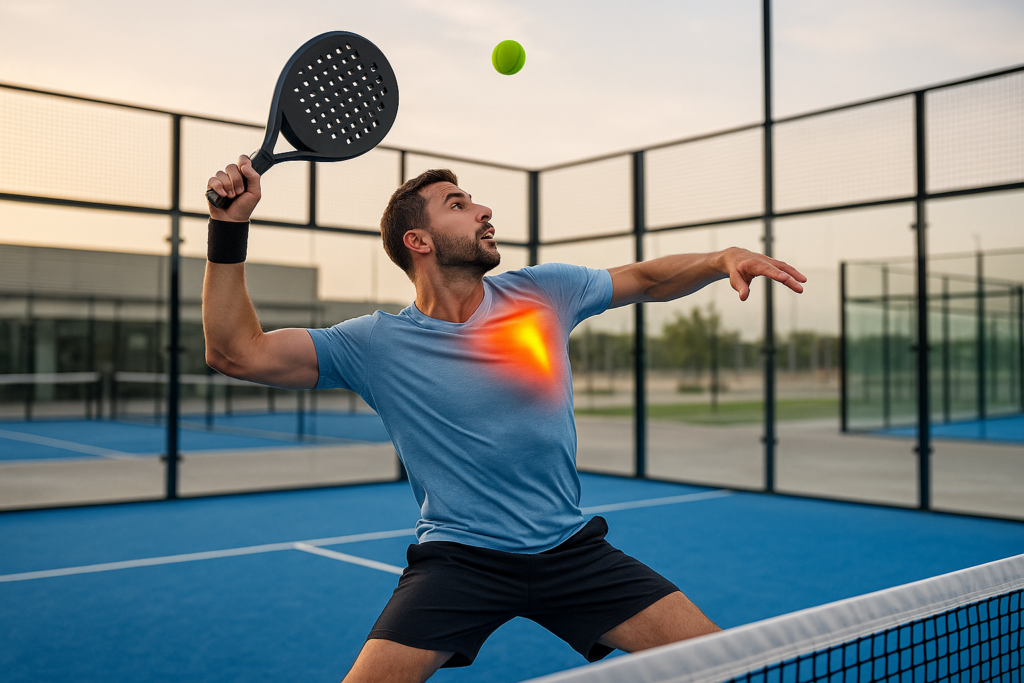
Padel and tennis require:
- Volleys
- Smashes
- Serves
- High shots near the glass
- Accelerated wrist and shoulder movements
These movements place significant stress on the rotator cuff and labrum.
3. Playing Frequently Without Adequate Recovery
In Abu Dhabi, many players participate:
- 3–5 times per week
- In leagues, tournaments, or social matches
- Late in the evening after work
Insufficient muscle recovery increases the risk of injury.
4. Warm Climate and Muscle Fatigue
Hot and humid conditions lead to:
- Faster fatigue
- Reduced shoulder control
- Higher injury risk
Indoor courts also encourage frequent play without seasonal breaks.
5. Poor Technique or Inadequate Equipment
Common issues include:
- Gripping the racket too tightly
- Poor smash technique
- Heavy rackets
- Incorrect grip size
These factors overload the shoulder muscles and tendons.
Most Common Shoulder Injuries in Padel and Tennis Players
1. Rotator Cuff Tendinopathy and Partial Tears
The repetitive overhead swing stresses the supraspinatus and infraspinatus, leading to:
- Tendinopathy
- Partial-thickness tears
- Night pain
- Weakness with lifting or serving
2. Shoulder Impingement
Frequent in players with:
- Rounded shoulders
- Weak scapular stabilizers
- Overuse
Causes pain when raising the arm or hitting overhead shots.
3. Long Head of the Biceps Tendon Pain
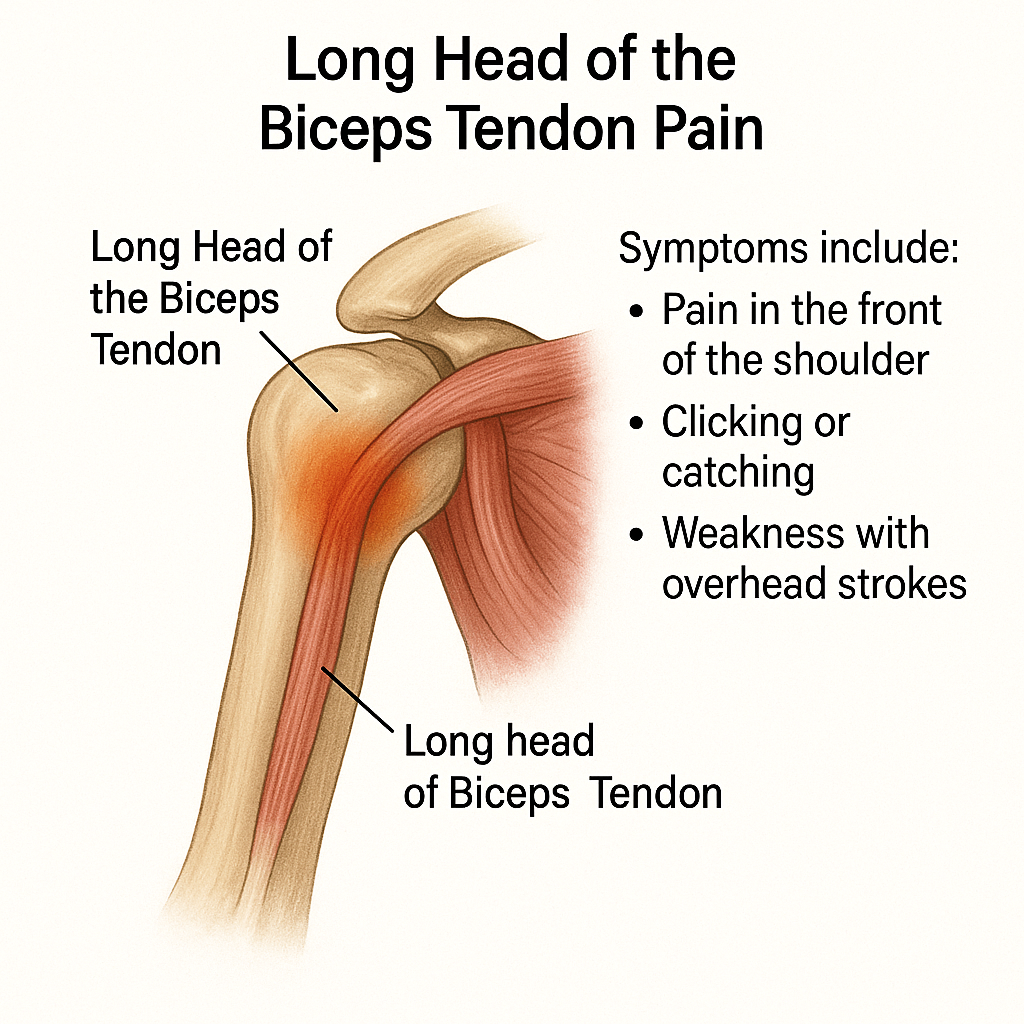
Very common in padel players due to:
- Smashes
- Overhead volleys
- Quick directional changes
Symptoms include:
- Pain in the front of the shoulder
- Clicking or catching
- Weakness with overhead strokes
4. Labrum Tears (SLAP or Bankart)
These occur from:
- Powerful overhead smashes
- Repeated high-velocity serves
- Previous shoulder instability
Patients experience:
- Deep shoulder pain
- Clicking or popping
- Weakness
- Loss of confidence during overhead shots
5. Shoulder Instability
Seen mainly in younger athletes or those with previous trauma.
Symptoms include:
- Feeling the shoulder may “slip out”
- Pain during forceful overhead movements
6. AC Joint Pain
Common in gym users who also play padel or tennis.
Cross-body movements or smashes irritate the top of the shoulder.
7. Scapular Dyskinesis (Altered Shoulder Blade Control)
Leads to:
- Poor mechanics
- Increased impingement
- Loss of power during serves or smashes
Extremely common in recreational players.
Typical Symptoms in Padel and Tennis Players
- Pain when serving or performing overhead strokes
- Sharp pain during smashes
- Pain when lifting the arm
- Fatigue in the shoulder after matches
- Clicking or popping
- Loss of strength
- Night pain
- Difficulty returning to play
Symptoms tend to get worse over weeks or months if not treated.
When Should You See a Shoulder Specialist?
Seek an assessment if you experience:
- Pain lasting more than 2–3 weeks
- Pain that limits training or match play
- Clicking or catching sensations
- Loss of power during overhead shots
- Night pain
- A traumatic injury during play
- Recurrent shoulder instability
Early treatment prevents progression to more serious injuries.
How Are Shoulder Injuries Diagnosed in Padel and Tennis Players?
1. Clinical Examination
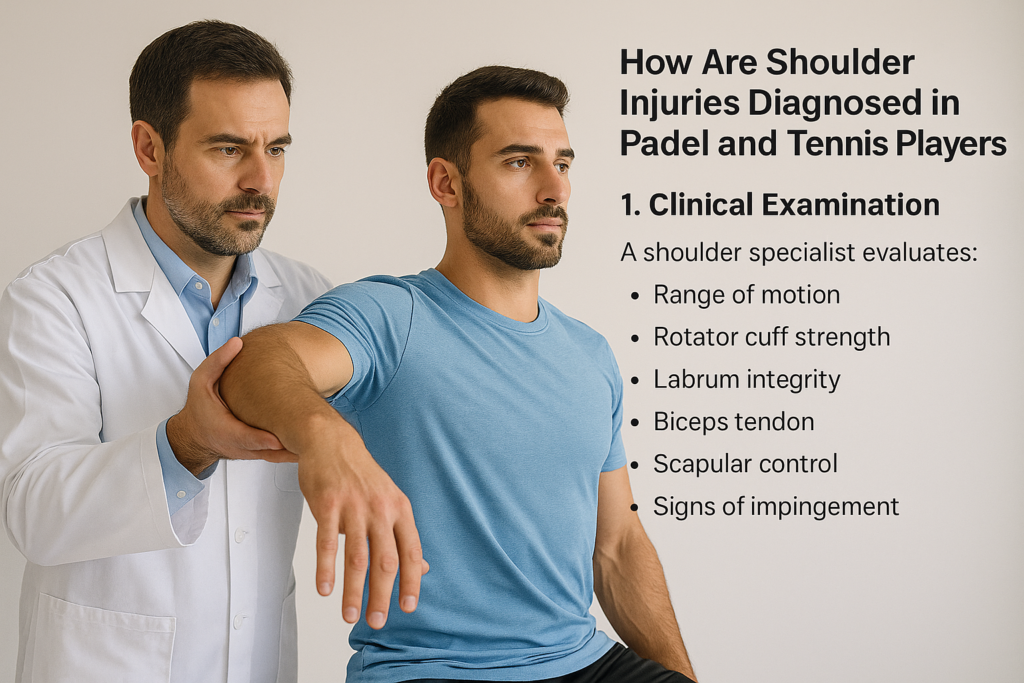
A shoulder specialist evaluates:
- Range of motion
- Rotator cuff strength
- Labrum integrity
- Biceps tendon
- Scapular control
- Signs of impingement
2. Ultrasound
Useful to detect:
- Tendinopathy
- Bursitis
- Partial tears
Dynamic assessment is helpful during movement.
3. MRI (or MRI Arthrogram)
Recommended when:
- Pain persists
- Labrum injury is suspected
- Instability is present
- Rotator cuff tear is possible
MRI shows:
- Labrum tears
- Biceps pathology
- Rotator cuff damage
- Bone oedema
- Inflammation
Best Treatment Options for Padel and Tennis Shoulder Injuries in Abu Dhabi
1. Physiotherapy (First-Line Treatment)
Key components:
- Rotator cuff strengthening
- Scapular stabilization
- Technique correction
- Stretching the posterior capsule
- Improving shoulder posture
- Gradual return-to-play program
This is the foundation of treatment.
2. Activity Modification
Short-term reduction of:
- Overhead smashes
- High-power serves
- Intense weekly match load
Controlled reintroduction prevents recurrence.
3. Anti-Inflammatory Medication
Useful during acute pain flares.
4. Ultrasound-Guided Injection
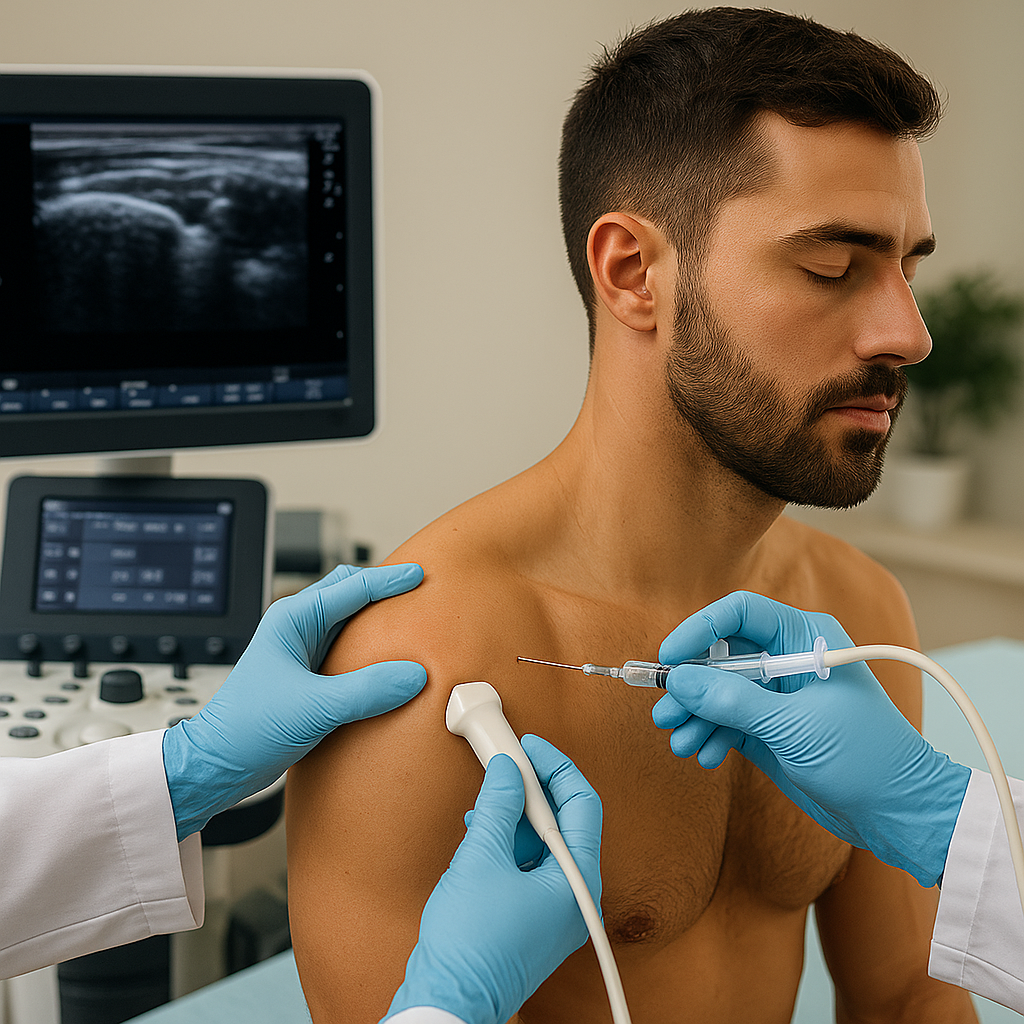
Indicated for:
- Severe bursitis
- Impingement
- Persistent biceps tendon pain
- AC joint inflammation
Provides significant pain relief and enables progress in physiotherapy.
5. Treatment of Underlying Biomechanics
Often necessary to prevent recurrence:
- Improving core stability
- Strengthening posterior shoulder muscles
- Technique refinement
6. When Is Surgery Recommended?
Surgery is considered when:
- Labrum tears (SLAP or Bankart) affect performance
- Rotator cuff tears are present
- Instability episodes recur
- Pain persists beyond 3–4 months of proper rehab
Arthroscopic procedures restore stability and allow full return to sport.
Recovery Timeline
Typical timeline for padel and tennis players:
- 2–6 weeks: Reduction of pain, improved control
- 6–12 weeks: Strengthening and technique retraining
- 3–4 months: Return to sport with controlled progression
- 4–6 months: Return to full power and competitive play
Labral injuries or tendon tears may require longer.
Preventing Shoulder Injuries in Padel and Tennis
Highly relevant for players in Abu Dhabi:
- Warm up before playing
- Strengthen rotator cuff and scapular muscles
- Avoid playing through pain
- Choose the correct racket weight and grip size
- Maintain proper technique
- Balance chest and back training in the gym
- Improve posture during desk work
Prevention is key to long-term performance.
Conclusion
Padel and tennis shoulder injuries are increasingly common in Abu Dhabi due to the rapid growth of these sports, intense playing schedules, and repetitive overhead movements.
With early diagnosis, physiotherapy, and proper technique adjustments, most players return to their sport pain-free.
If symptoms persist, early evaluation by a shoulder specialist is essential to avoid long-term damage and maintain performance.